Research Roundup December 2026: Recently Published Findings From AFSP-Funded Studies
December 1, 2026 – 6 min read
By AFSP

The Research Roundup is a regular update of recently published findings in suicide prevention research. AFSP-funded studies included in this roundup examined how…
- Suicide-focused treatment may help people reduce distress and experience more joy
- Brief online training can help pharmacy staff recognize and respond to suicide risk
- Hopeful, recovery-focused media can challenge suicide myths and encourage help-seeking, and
- Different medical treatments reduce suicidal risk on different timelines

Researcher: Shireen Rizvi, PhD
Institution: Rutgers University
Grant Type: 2012 Standard Research Grant — $72,040
Grant Title: Feasibility and Efficacy of a DBT Skills "App" for Suicidal Individuals with BPD
Suicide prevention treatment understandably focuses on reducing distress, suicidal thoughts, self-harm, and other behaviors that place someone in danger. But recovery can involve more than the absence of suffering. Dialectical Behavior Therapy (DBT), which was originally developed for people with chronic suicidal behavior and borderline personality disorder (BPD), explicitly describes its larger goal as helping people build a “life worth living.” This raises an important question about how we understand improvement: alongside decreases in painful emotions and harmful behaviors, can effective treatment also help people experience more positive emotions such as joy? Positive emotions have received considerably less attention in psychotherapy research than depression, anxiety, and other forms of distress, even though emerging research suggests that increases in experiencing more positive emotions may contribute to psychological recovery and may represent an important treatment target in their own right.
With support from an AFSP grant, Dr. Shireen Rizvi followed 95 adults with BPD through six months of comprehensive DBT treatment, using daily diary cards to track joy and negative emotions. Across more than 11,000 daily observations, joy increased while negative emotions decreased. Joy rose most quickly early in treatment, and began to level off around month four. Notably, when people experienced more joy than was typical for them during a given month, their BPD symptoms tended to improve at the next assessment. The study did not test whether greater joy reduced suicidal thoughts or behavior; and without a comparison group, the study cannot show that DBT itself caused the change. Still, the findings suggest that progress in suicide-focused treatment may be about more than reducing crisis and suffering. It may also involve helping people experience more of what makes life feel meaningful.
Citation: Bitran, A. M., Hughes, C. D., Bist, J., Krall, H. R., Yin, Q., & Rizvi, S. L. (2026). The effects of dialectical behavior therapy on joy: A diary card study. Cognitive Therapy and Research, 50, 315–325. https://doi.org/10.1007/s10608-025-10704-z
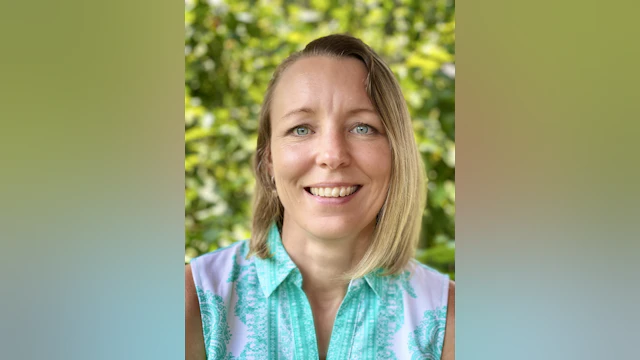
Researcher: Delesha Carpenter, PhD, MSPH
Institution: University of North Carolina at Chapel Hill
Grant Type: 2020 Standard Research Grant — $100,000
Grant Title: Developing and Evaluating a Scalable Suicide Prevention Gatekeeper Training Program for Community Pharmacy Staff
Community pharmacists and pharmacy technicians are among the most accessible healthcare professionals, and their regular interactions with patients can create opportunities to recognize when someone may be struggling. Previous research has found that pharmacy staff do encounter patients showing suicide warning signs, yet relatively few have received specific training or feel equipped with the resources needed to respond. Suicide prevention “gatekeeper” training aims to close this gap by teaching community members how to recognize warning signs, ask directly about suicide, and connect someone with appropriate support. For pharmacy settings in particular, brief and easily accessible training may be especially important because longer, in-person programs can be difficult to fit into a busy workday.
With her AFSP-funded grant, Dr. Delesha Carpenter developed and tested Pharm-SAVES, a brief online suicide prevention training for community pharmacy staff. After training, the proportion of participants who directly asked about suicide in patient scenarios increased from 7% to 71%, and referrals to the 988 Suicide & Crisis Lifeline rose from 49% to 74%. Participants also reported greater knowledge, confidence, and preparedness, with gains still evident one month later. An enhanced version with interactive video cases did not outperform the standard program, suggesting that a simpler training may be enough to produce meaningful improvements. Although the study measured responses to hypothetical scenarios rather than real-world patient encounters, the findings show how brief training could help turn pharmacies into another everyday setting for suicide prevention.
Citation: Carpenter, D. M., Stover, A., Shackley, A. G., Tudor, G., Cross, W., Marley, G., Bellamy, S., & Lavigne, J. E. (2026). The impact of an online suicide prevention training program on community pharmacy staff outcomes: A cluster randomized trial. Journal of the American Pharmacists Association, 66(3), 103038. https://doi.org/10.1016/j.japh.2026.103038

Researcher: Gregory Armstrong, PhD
Institution: University of Melbourne (Australia)
Grant Type: 2020 Standard Grant — $98,758
Grant Title: Determining the Effects of Protective Suicide Content in the Print Media in India
How suicide is portrayed in the media can shape what people understand about suicide, recovery, and help-seeking. Responsible reporting guidelines have traditionally focused on avoiding potentially harmful practices, but researchers are increasingly interested in whether media can also play a more active role in prevention. Stories that emphasize coping, recovery, available support, and hope may help challenge misconceptions and show that suicidal crises can be survived. Yet much of the evidence on these protective approaches comes from high-income countries, leaving important questions about how audiences in other cultural settings experience suicide-related media.
With AFSP funding, Dr. Gregory Armstrong interviewed 20 young adults in Chennai, India, who had read articles specifically developed to promote suicide prevention as part of a larger randomized trial. Participants contrasted the articles with the suicide coverage they typically encountered, which they often described as sensationalized, simplistic, and focused on the crisis rather than what might help someone cope. The prevention-focused articles instead included information about support and help-seeking, emphasized hope and recovery, and challenged common myths; some also incorporated lived-experience stories. Participants said this content increased their understanding, sparked conversations, made sources of support more visible, and helped communicate that people can recover from suicidal thoughts. Because this qualitative study explored participants’ experiences rather than directly measuring changes in suicidal behavior, it cannot show that hopeful reporting itself prevents suicide. Still, the findings suggest that responsible media can do more than avoid harm. It may also create opportunities to educate, reduce stigma, encourage help-seeking, and make recovery a more visible part of the story.
Citation: Armstrong, G., Kumar, S., Mohanraj, R., Krishnamoorthy, S., & Vijayakumar, L. (2026). Young adult perspectives on media content related to suicide in South India: A qualitative study. BMJ Open, 16, e113009. https://doi.org/10.1136/bmjopen-2025-113009

Researcher: Mina Rizk, MD
Institution: Icahn School of Medicine at Mount Sinai
Grant Type: 2025 Early Career Researcher Grant — $140,000
Grant Title: Immune Mechanisms Underlying The Rapid Anti-suicidal Effects of Electroconvulsive Therapy and Ketamine
Determining which types of medical treatments directly reduce suicidal thoughts, attempts, or deaths is surprisingly difficult. Many medications used with people at risk were developed to treat underlying conditions such as depression, bipolar disorder, schizophrenia, or substance use disorders. Most clinical trials of those medications measure improvement in the above conditions, rather than suicidal behavior itself.
Suicide attempts and deaths are relatively rare outcomes within clinical trials; even large studies may not include enough events to determine whether a treatment prevents them. A treatment may reduce suicidal thoughts because a person’s depression or other symptoms improve; some treatments may have additional effects on the biological and psychological processes underlying suicidal behavior. Different treatments may also be useful at different moments, from rapidly stabilizing someone during an acute crisis to reducing the likelihood that their risk returns over time.
With support from an AFSP Early Career Research Grant, Dr. Mina Rizk and his mentor and AFSP Scientific Advisor and Past President and Board member, Dr. J. John Mann conducted a review of evidence for medications and brain-based treatments associated with reduced suicidal thoughts or behavior. They found that ketamine and electroconvulsive therapy (ECT) can rapidly reduce suicidal thoughts, while lithium and clozapine have some of the strongest evidence for longer-term reductions in suicidal behavior in specific psychiatric disorders. Medications for opioid use disorder have also been associated with lower suicide and overdose mortality.
The review highlights a major gap: that relatively few randomized trials have been designed specifically to test whether treatments directly prevent suicide attempts or deaths. The researchers suggest that effective medical suicide prevention may ultimately require combining rapid-acting treatments for acute crises with longer-term strategies that help keep risk from returning.
Citation: Rizk, M. M., & Mann, J. J. (2026). An update on somatic treatments for suicide risk. American Journal of Psychiatry, 183(6), 382–400. https://doi.org/10.1176/appi.ajp.20260287
Learn more about the AFSP research grants featured in this monthly roundup, as well as others, here.