March Research Roundup 2026: Recently Published Findings From AFSP-Funded Studies
February 26, 2026 – 7 min read
By AFSP

The Research Roundup is a regular update of recently published findings in suicide prevention research. AFSP-funded studies included in this roundup examined how…
-
Extreme Risk Protection Order laws impacted firearm suicide rates in four U.S. states
-
A new assessment could help clinicians improve short-term suicide risk detection
-
Effectively psychosocial therapies treat self-injurious thoughts and behaviors in youth, and
-
ADHD medication timing relates to suicide risk before and during treatment

Researcher: Yunyu Xiao, Ph.D.
Institution: Cornell University, Weill Cornell Medicine
Grant Type: 2023 Early Career Researcher Grant — $109,488
Grant Title: Understanding Structural Social Determinants of Suicidal Trajectories
More than half of all suicide deaths in the United States involve a firearm. Because firearms are highly lethal and often used in moments of crisis, policies that temporarily reduce firearm access during periods of heightened risk have become a central strategy in suicide prevention. Extreme Risk Protection Orders, sometimes called red flag laws, allow courts to temporarily remove firearms from individuals judged to be at serious risk of harming themselves or others. Supporters view these laws as a way to create time and distance during moments of acute distress. At the same time, an important question remains in the field: do these laws reduce overall suicide deaths, or do individuals simply turn to other methods? Understanding this distinction is essential to evaluating how lethal means safety works in real-world settings.
In this large, county-level study spanning from 2012 to 2022, Dr. Yunyu Xiao looked at suicide trends in four states (Massachusetts, New Jersey, New Mexico, and Rhode Island) that enacted ERPO laws without passing other firearm legislation at the same time, and then compared them to trends in eight states that did not enact ERPO laws during the study period. After accounting for local economic conditions, mental health resources, and other factors that can influence suicide rates, Dr. Xiao found that firearm suicides declined in the year following ERPO implementation. This reduction translated to an estimated 675 fewer firearm suicide deaths across the treatment states. Importantly, there was no measurable increase in suicides by other methods during the same period. Taken together, the findings suggest that ERPO laws may reduce firearm suicides, offering support for policies that temporarily limit access to highly lethal means during times of crisis.
Citation: Brown, T. T., Kaplan, M. S., Yan, Z., & Xiao, Y. (2026). Extreme Risk Protection Orders and Firearm and Nonfirearm Suicides in the US. JAMA health forum, 7(1), e256442. https://doi.org/10.1001/jamahealthforum.2025.6442
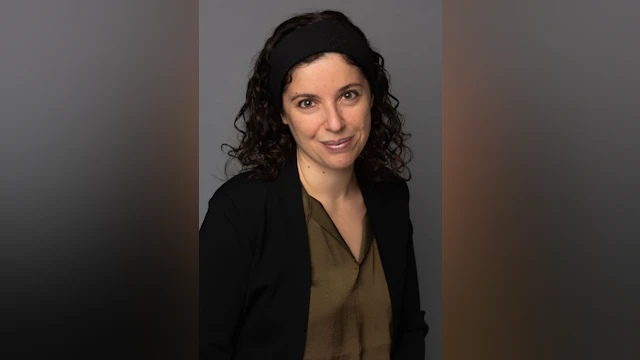
Researcher: Sarah Bloch-Elkouby, Ph.D.
Institution: Icahn School of Medicine at Mount Sinai
Grant Type: 2021 Young Investigator Grant — $90,000
Grant Title: Enhancing Suicide Risk Assessment and Prevention Among Diverse Adolescents Using Virtual Human Interaction
A persistent challenge in suicide prevention is that many individuals who attempt or die by suicide deny suicidal thoughts when asked directly. Suicidal intent can shift quickly, sometimes intensifying in the hours or days before an attempt. These realities make it difficult for clinicians to rely on self-reporting alone when assessing short-term risk. The Suicide Crisis Syndrome (SCS) has been proposed by Dr. Igor Galynker as a suicide-specific mental state marked by a powerful sense of entrapment, emotional pain, cognitive overwhelm, hyperarousal, and social withdrawal. Prior research has shown that this pattern of symptoms can signal heightened near-term risk, but most assessments have relied on patient questionnaires. To support everyday clinical practice, there is a need for a structured, clinician-rated interview tool that could help identify this crisis state, even when patients do not openly disclose suicidal thoughts.
With her AFSP-funded research grant, Dr. Sarah Bloch-Elkouby along with Dr. Galynker developed and tested the Suicide Crisis Syndrome Checklist (SCS-C), a brief, 15-item interview tool administered to 219 adults admitted to psychiatric inpatient units. The checklist allows clinicians to assess core features of the suicide crisis state through targeted questions during routine evaluation. The measure showed strong reliability, meaning clinicians tended to agree in their ratings and the items worked together consistently. Patients who met criteria for the Suicide Crisis Syndrome were significantly more likely to have also engaged in suicidal behaviors in the week prior to the assessment, supporting the tool’s clinical relevance. Notably, the SCS-C was linked more closely to suicidal behaviors than to the severity of suicidal thoughts as measured by the Columbia-Suicide Severity Rating Scale (C-SSRS). This reinforces that imminent risk is not always captured by suicidal ideation alone. While further research is needed to determine how well the tool predicts future outcomes, these findings suggest that structured clinician-guided assessment of the suicide crisis state may strengthen short-term risk detection and support more informed intervention.
Citation: Bloch-Elkouby, S., El-Hayek, R., Cohen, L., Chen, J. P., Gorman, B., Apter, Y., Wheeler, E., Park, B., Prekas, A. S., & Galynker, I. (2026). The clinician rated suicide crisis syndrome checklist (SCS-C): Structure, reliability, and concurrent validity among adult psychiatric inpatients. Journal of affective disorders, 402, 121341. Advance online publication. https://doi.org/10.1016/j.jad.2026.121341

Researcher: Catherine Glenn, Ph.D.
Institution: Old Dominion University
Grant Type: 2022 Standard Research Grant — $100,000
Grant Title: Evaluating the Impact of Teen-to-teen Crisis Lines
Over the past two decades, research on psychosocial treatments for self-injurious thoughts and behaviors (SITBs) in youth has grown substantially. Clinicians and families now have more options than ever before, including therapies designed specifically to reduce suicidal ideation, suicide attempts, and nonsuicidal self-injury. Still, the field continues to ask an important question: which treatments have the strongest evidence, and for whom do they work best? As rates of youth suicide and self-harm remain elevated, regularly updating the evidence base is essential to ensure that prevention and intervention efforts are grounded in the most rigorous and current science.
With an updated review covering studies published between 2018 and 2024, Dr. Catherine Glenn and her team evaluated the strength of evidence for psychosocial treatments targeting self-injurious thoughts and behaviors in children and adolescents. Building on prior evidence reviews, she examined randomized controlled trials and other rigorous evaluations to determine which approaches meet criteria for well-established, probably efficacious, or possibly efficacious treatments. The findings indicate that several structured, skills-based therapies, particularly those incorporating cognitive behavioral and dialectical behavior therapy components, continue to show the strongest support for reducing suicidal behaviors and self-harm in youth. Family involvement and emotion regulation skill-building emerged as common and important elements across effective interventions. At the same time, the review highlighted ongoing gaps, including limited replication studies, variability in outcome measurement, and the need for more research in diverse populations and real-world clinical settings. Overall, evidence-based psychosocial treatments can meaningfully reduce risk for self-injurious thoughts and behaviors in youth, while underscoring the importance of continued refinement and implementation research.
Citation: Esposito, E. C., Patel, K. K., Hull, S., Johnson, C. N., Patel, M. A., & Glenn, C. R. (2026). Evidence Base Update of Psychosocial Treatments for Self-Injurious Thoughts and Behaviors in Youth: 2018–2024. Journal of Clinical Child & Adolescent Psychology, 55(1), 1–38. https://doi.org/10.1080/15374416.2026.2613368

Researcher: Brian D’Onofrio, Ph.D.
Institution: Indiana University
Grant Type: 2020 Distinguished Investigator Grant — $124,984
Grant Title: Risks and Benefits of ADHD Medication for Suicidal Behavior: A National Study of At-Risk Youth
Attention-deficit/hyperactivity disorder (ADHD) is associated with elevated risk for suicidal thoughts and behaviors, raising important questions about how treatment may influence that risk. Stimulant medications are considered first-line treatment for ADHD, while nonstimulant options such as atomoxetine and alpha-2 agonists are often used when stimulants are not effective, not well tolerated, or not clinically appropriate. Understanding how suicide risk changes before, during, and after treatment is critical for clinicians, families, and patients navigating care decisions, particularly during periods of symptom worsening or medication adjustment.
With support from his AFSP grant, Dr. Brian D’Onofrio and colleagues analyzed data from more than 830,000 individuals with ADHD who filled prescriptions between 2016 and 2021. The researchers tracked suicide-related emergency department visits and hospitalizations over time, comparing each person’s suicidal behavior while taking medication to periods when they were not. This approach allowed the team to focus on how risk changed within the same individual, rather than comparing different people who may differ in important ways. Across stimulant and nonstimulant medications, suicide-related behaviors increased in the two months before medication was started and then declined after treatment began. In other words, risk for suicidal behavior appeared to peak just before treatment initiation. After medication started, rates decreased but did not immediately return to the lowest levels observed during more stable periods. These patterns were generally similar across sex and racial and ethnic groups, with some variation by age. Overall, the findings suggest that risk for suicidal behavior often intensifies before ADHD medication is initiated and then declines afterward, indicating that periods of clinical worsening may prompt treatment.
Citation: Adams S.M., Meraz R., O’Reilly L.M., Riley T., Froehlich T., Chang Z.,Quinn P.D. & D’Onofrio B.M., Pharmacotherapies for attention-deficit/hyperactivity disorder and risk of suicidal behavior: A within-individual study of stimulants, atomoxetine, and alpha-2 agonists, Biological Psychiatry Global Open Science (2026), doi: https://doi.org/10.1016/j.bpsgos.2026.100698
Learn more about the AFSP research grants featured in this monthly roundup, as well as others, here.